How to Get Rid of Plaque: What Works at Home and What Needs a Dentist
How to get rid of plaque depends on one thing: whether it is still soft. Soft plaque comes off with good daily cleaning. Hardened plaque, called tartar, does not.
That split explains most of the confusion online. Home care is enough for one stage and useless for the next. This guide shows where the line sits, what the evidence says about the tools and tricks people try, and when a professional cleaning is the only real answer.
What Plaque Actually Is
Plaque is a sticky film of bacteria that builds up on your teeth. You cannot see it well, and it forms every day, whatever you eat. It sits along the gumline, between teeth and in the grooves of back teeth.
The harm comes from what it does there. The National Institute of Dental and Craniofacial Research (NIDCR) explains that the bacteria in plaque and tartar can trigger inflammation that damages the gums and the tissue supporting your teeth. The NHS says plainly that gum disease is caused by a build-up of plaque on your teeth.
Plaque also feeds decay. The bacteria turn sugars into acid, and acid pulls minerals out of enamel. So plaque is the common upstream cause of both cavities and gum disease. Remove it daily and you cut off both problems at the source.
Plaque vs Tartar: The Line That Decides Everything
NIDCR notes that plaque, if not removed every day, can harden and form tartar. Cleveland Clinic describes tartar as hardened dental plaque, and it can form above and below the gumline.
The practical difference:
- Plaque is soft and sticky. A toothbrush and interdental cleaning can remove it.
- Tartar is hard and bonded to the tooth. Cleveland Clinic states that you cannot remove it with brushing and flossing alone.
Because home care cannot clear it, tartar is the reason a good brushing routine still needs regular professional cleanings alongside it.
You can sometimes see tartar as a yellow or brown crust on the teeth. But you often cannot see it, especially under the gums. A dentist or hygienist can.
How to Get Rid of Plaque at Home
Home care removes soft plaque and slows the rebuild. None of the steps are exotic, and consistency matters more than any product.
1. Brush twice a day for about two minutes
The NHS advises brushing twice a day for about two minutes each time, with a toothpaste that has at least 1,350ppm fluoride for adults. Brush every surface of every tooth, and angle the bristles toward the gumline.
2. Spit, do not rinse
The same NHS guidance says not to rinse straight after brushing, because that washes away the concentrated fluoride left on your teeth. Spit out the excess and leave it.
3. Clean between your teeth every day
A toothbrush cannot reach the sides of teeth that touch. Floss or interdental brushes do. A Cochrane review of 35 trials with 3,929 adults found that floss, added to toothbrushing, may reduce gingivitis, and that interdental brushes may reduce both gingivitis and plaque. The authors rated the evidence low to very low certainty and said the effects may not be clinically important, partly because most participants started with healthy gums.
That is an honest limit on the research, not a reason to skip the step. The review also found interdental brushes may beat floss for gingivitis at one and three months. If your gaps are wide enough for a brush, it may be the easier tool. The NHS recommends either, and warns against wooden toothpicks because they can damage the gums.
4. Cut how often you eat sugar
Plaque bacteria turn sugar into acid, so frequent sugary snacks and sipped sweet drinks keep that acid going. Keep sugary food to mealtimes and drink water between them. Our guide on how to stop tooth decay covers this in more detail.
5. Do not smoke
The NHS lists stopping smoking as part of gum disease prevention. Cleveland Clinic includes avoiding tobacco in its tartar prevention advice. Tobacco is a risk factor you can change.
Do Electric Toothbrushes Remove More Plaque?
A little more, on average. A Cochrane review of 56 trials found that powered toothbrushes reduced plaque by 11 percent at one to three months and by 21 percent after three months, compared with manual brushes. Gingivitis fell by 6 percent and 11 percent at the same points. The evidence was moderate quality, and the authors wrote that the clinical importance of the findings remains unclear.
The NHS takes a more relaxed view: it says it does not matter whether you use an electric or manual brush. Both can work if you use fluoride toothpaste and brush properly.
Fair reading: an electric brush is a reasonable upgrade if you tend to rush, because the timer and the motion do some of the work. A careful manual brusher gets most of the same result.
Baking Soda, Oil Pulling and Other Home Remedies
Searches for "how to get rid of plaque naturally" mostly lead to two ideas. Neither beats the basics.
Baking soda
A systematic review of 21 publications on baking soda toothpaste found promising plaque removal in single-use studies. That finding was only partly supported in follow-up studies. Bleeding scores showed a small reduction. So baking soda is a fine ingredient in a toothpaste. It is not a reason to drop fluoride, and kitchen baking soda scrubbed on dry teeth is not the same thing as a formulated paste.
Oil pulling
Oil pulling means swishing oil in the mouth for several minutes. A 2022 meta-analysis of 9 trials with 344 participants found it lowered salivary bacteria counts. It found no meaningful difference from chlorhexidine on plaque or gum scores. The authors noted that four of the nine studies were low quality and called for more rigorous trials.
That is thin support. Oil pulling is harmless for most adults, but it does not remove plaque the way a brush does, and it will not touch tartar.
How to Remove Tartar From Teeth
Here the advice is blunt. You cannot do it yourself. Cleveland Clinic warns that trying to remove tartar at home can damage your teeth and increase your risk of cavities. That includes metal scrapers and "tartar removal" tools sold online, and tartar under the gumline is out of reach anyway.
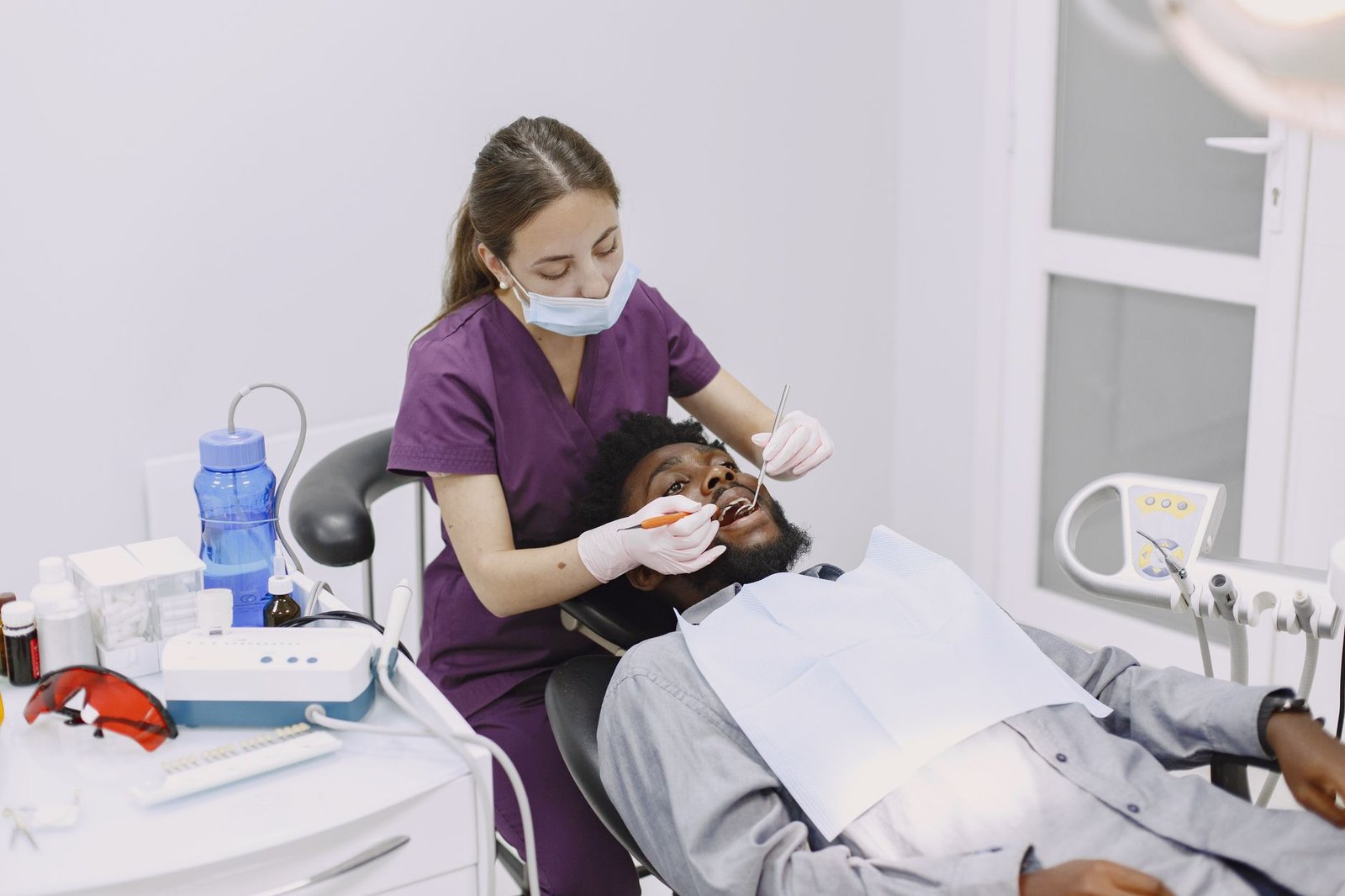
A dentist or hygienist removes tartar with special instruments during a professional cleaning. For tartar below the gumline in people with gum disease, Cleveland Clinic says treatment can include scaling and root planing, a deeper cleaning of the root surfaces. Some practices also use lasers.
A cleaning does not make tartar impossible to return. It resets the surface. Daily plaque control then decides how long it stays clean.
How often you need a cleaning varies. Cleveland Clinic says preventive visits twice a year work well for a lot of patients, and some need more frequent appointments. Your dentist sets the interval based on your gums and your history. The NHS suggests check-ups at intervals of up to two years for adults with healthy mouths, with more frequent visits when a dentist advises it. Ask what is right for you rather than guessing.
Do Supplements or Drops Help With Plaque?
No supplement has been shown to remove plaque or tartar. The tools that have evidence are mechanical: brushing, cleaning between teeth and professional scaling. Anything sold as a shortcut should be judged against that standard.
One product in this space is Dentitox Pro, a liquid applied directly to the teeth and gums. Its ingredient list includes xylitol, vitamins A, C, D3 and K2, zinc and calcium. As our full Dentitox Pro review explains, the vendor does not disclose ingredient amounts, and there is no independent clinical trial on the formula itself. It will not dissolve tartar or replace a cleaning. At most, it is an add-on to the habits above. For a wider look at what is and is not supported, see our guide to the best supplements for gum health.
Why Plaque Control Matters for Your Gums
If plaque stays on the teeth, the gums react. NIDCR describes early gum disease as caused by plaque buildup, and says it can often be reversed by daily brushing and flossing. The first signs are swollen, red or bleeding gums.
That is good news, because it means bleeding gums are often a plaque signal you can act on. If yours bleed when you brush, do not skip the area. Clean it gently and consistently, and see a dentist if it does not settle in about two weeks. Our guides on how to stop bleeding gums and how to reverse gum disease explain what can and cannot be reversed.
The NHS lists the warning signs: gums that bleed when you brush or eat hard foods, and gums that look swollen, red and sore. Left untreated, gum disease can lead to bad breath, shrinking gums, and loose or lost teeth. None of that starts overnight. It builds over months of plaque left in place, which is why a few extra minutes a day pays off.
Once gum disease has progressed, home care alone is not enough. NIDCR notes that periodontal disease needs treatment from dental professionals, who may do a deep cleaning and show you better technique.
A Simple Daily Routine That Keeps Plaque Down
Put together, a plaque-control day looks plain:
- Morning: brush for two minutes with a fluoride toothpaste, then spit.
- Daytime: keep sugary food and drinks with meals. Drink water in between.
- Evening: clean between your teeth first, then brush for two minutes and spit. Eat and drink nothing but water afterward.
- Twice a year, or as your dentist advises: a check-up and professional cleaning.
The order of the steps matters less than doing them every day. If you are unsure about your technique, ask your hygienist to watch you brush and clean between your teeth at your next visit.
When to See a Dentist or Doctor
Book a dental visit rather than waiting if you notice:
- a hard yellow, brown or gray crust on your teeth that brushing will not shift;
- gums that bleed, look red, or feel swollen and sore for more than two weeks;
- bad breath or a bad taste that does not go away;
- gums pulling back from the teeth, or teeth that feel loose;
- a toothache, or sensitivity to hot, cold or sweet that keeps returning.
Get urgent care the same day if you have facial swelling, a fever with tooth or gum pain, pus near a tooth, or swelling that makes it hard to swallow or breathe. Those are signs of infection, and they are not for home treatment.
Frequently Asked Questions
Can you get rid of plaque at home?
Yes, as long as it is soft plaque. Thorough brushing with a fluoride toothpaste and cleaning between your teeth every day removes it. Once plaque hardens into tartar, brushing and flossing cannot remove it and a dentist or hygienist has to.
How long does it take plaque to come back?
Plaque starts rebuilding as soon as you clean it away, because bacteria keep forming a sticky film on teeth. That is why daily cleaning matters more than any single deep clean.
Is an electric toothbrush better at removing plaque?
Slightly, according to a Cochrane review. Powered brushes reduced plaque by 11 percent at one to three months and 21 percent after three months, though the authors said the clinical importance is unclear. The NHS says either type works if you brush well.
Does baking soda remove plaque?
Baking soda toothpaste looked promising for plaque removal in single-use studies, but a systematic review found that finding only partly held up in follow-up studies. It is a reasonable ingredient in a toothpaste, not a replacement for brushing technique or fluoride.
Does oil pulling remove plaque?
The evidence is limited. A 2022 meta-analysis of 9 small trials with 344 participants found oil pulling lowered salivary bacteria counts, but its authors called for better-designed trials. It should not replace brushing.
Can I scrape tartar off my teeth myself?
No. Cleveland Clinic says attempting to remove tartar at home can damage your teeth and increase your risk of cavities. A dentist or hygienist uses special instruments to remove it safely.
Can a supplement like Dentitox Pro get rid of plaque?
No supplement has been shown to remove plaque or tartar. Dentitox Pro is a liquid applied to the teeth and gums, and there is no independent clinical trial on the formula itself. At most it is an add-on to brushing, cleaning between teeth and professional cleanings.
Soft plaque is the stage you control. Clean it every day and tartar has little to build on.