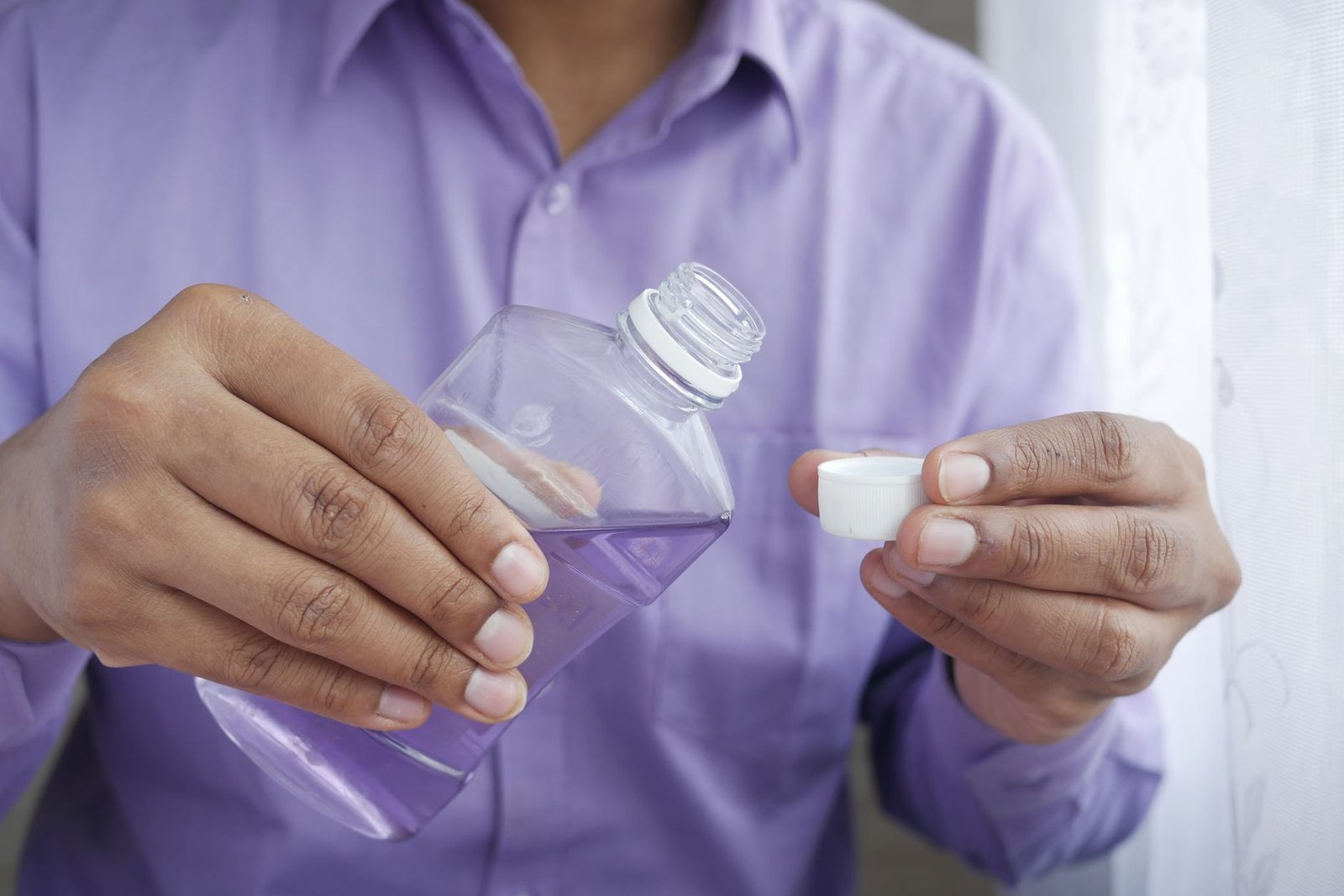
Is Mouthwash Bad for You? What the Research Actually Says
Is mouthwash bad for you? For most adults using a standard rinse as directed, the evidence says no. But a few real questions sit behind that answer, and they deserve a straight look. You have probably seen headlines about alcohol, blood pressure, and cancer. Some of those headlines overstate the research. Others point at something real.
This guide separates the two. It covers what mouthwash actually does, what the studies on alcohol, chlorhexidine, and oral bacteria found, and who should be careful. It also covers what a rinse cannot fix.
Is Mouthwash Bad for You? The Short Answer
Used as the label directs, over-the-counter mouthwash is considered safe for most adults. No major dental body tells healthy adults to avoid it. The American Dental Association (ADA) describes mouthrinse as a useful extra for some people, not a requirement.
The concerns that do hold up are narrower than the headlines:
- Strong antiseptics such as chlorhexidine are meant for short courses. Used longer than about four weeks, they stain teeth and build up tartar.
- Daily antiseptic use reduces oral bacteria that help the body make nitric oxide. Small trials link a week of chlorhexidine to a small blood pressure rise. The long-term meaning for ordinary rinses is unsettled.
- Alcohol-containing rinses have been studied for oral cancer risk. The evidence is inconsistent and cannot confirm a link on its own.
- Children under 6 should not use mouthrinse unless a dentist says so, because they swallow it.
The rest of this article takes each point in turn.
What Mouthwash Actually Does (and Does Not Do)
The ADA splits rinses into two groups. Cosmetic rinses freshen breath and leave a pleasant taste. They do not lower your risk of cavities or gum disease. Therapeutic rinses contain active ingredients that can reduce plaque, gingivitis, bad breath, or tooth decay.
Common active ingredients include:
- Fluoride, which targets tooth decay.
- Cetylpyridinium chloride (CPC), an antibacterial found in many drugstore rinses.
- Essential oils such as eucalyptol, menthol, and thymol.
- Chlorhexidine, a strong antiseptic usually dispensed through a dentist or pharmacy.
A rinse works on surfaces it can reach. It does not scrape plaque off teeth, and it does not remove the coating on the back of the tongue. That is why dentists treat it as an add-on to brushing and cleaning between teeth, never a replacement. If your breath problem is stubborn, the cause is usually somewhere a rinse only briefly touches. Our guide to why breath still smells bad after brushing walks through the usual suspects.
Alcohol vs Alcohol-Free: Does It Matter?
Classic rinses often contain alcohol at a noticeable strength, which is why they sting. Alcohol-free versions use other ingredients to do the antibacterial work.
For cleaning power, the difference is small. Rinses containing alcohol reduce plaque and oral bacteria, but they are likely no better than alcohol-free ones. So alcohol is not the reason a rinse works.
That makes the choice mostly about comfort and circumstances. An alcohol-free rinse is the easier pick if:
- you have a dry mouth, or take medication that dries it out;
- the burn makes you cut the rinse short;
- you are recovering from dental surgery or have sore tissue;
- you are choosing for an older child who is old enough to rinse and spit reliably.
Dry mouth matters more than it sounds. Saliva washes bacteria away, and when flow drops, bad breath tends to get worse. A rinse that leaves your mouth feeling drier can work against you. If dry mouth is already your issue, ask your dentist or doctor which rinse suits you.
Chlorhexidine: Strong, Effective, and Not for Daily Life
Chlorhexidine is the heavyweight of mouthrinses. A Cochrane review summarized by the UK's National Institute for Health and Care Research (NIHR) pooled 51 randomized trials with 5,345 participants. It found a large reduction in plaque at four to six weeks when chlorhexidine was added to brushing, in people with mild gum disease.
The same review found the trade-off. Tooth staining rose significantly at four to six weeks, seven to twelve weeks, and six months. Tartar buildup can follow, and the stain may need a professional cleaning. The review also flagged that 50 of the 51 trials had a high risk of bias, so the evidence is useful but not airtight.
In the UK, chlorhexidine mouthwash is licensed for 30 days. A dentist may recommend it after a procedure, during a gum flare-up, or when brushing is painful. Used that way, under direction, it is a reasonable tool.
The problem is turning a short-term treatment into a daily habit. If you have been using a prescribed chlorhexidine rinse for months, call your dentist and ask whether you should still be on it. Do not simply stop a rinse a clinician prescribed without asking first.
Mouthwash, Oral Bacteria, and Blood Pressure
This is the most interesting finding, and the most easily overstated one.
Certain bacteria on your tongue convert nitrate from food (leafy greens and beetroot are rich sources) into nitrite. Your body then uses nitrite to make nitric oxide, a molecule that helps blood vessels relax. Kill many of those bacteria and the chain weakens.
A small trial tested exactly that. In 19 healthy non-smoking volunteers, a week of chlorhexidine mouthwash cut salivary nitrite by roughly 90 percent and plasma nitrite by roughly 25 percent. Clinic blood pressure rose by about 3.5 mm Hg systolic and 2.2 mm Hg diastolic. The rise appeared within a day and lasted through the week.
Keep three limits in mind before drawing conclusions:
- The study was small and short. It lasted seven days.
- It used chlorhexidine, a stronger antiseptic than most shelf rinses. Other products affect bacteria differently.
- A few millimeters of mercury is not a medical emergency. Whether a small, sustained rise from months of daily rinsing would matter for heart health is not established.
If you take blood pressure medication or have hypertension, it is fair to mention your daily rinse at your next appointment. There is no reason to panic, and no need to throw out a bottle you use occasionally.
What About Alcohol Mouthwash and Oral Cancer?
This worry has circulated for decades. Here is what the research looks like when it is gathered in one place.
A systematic review of 8 studies covering 43,499 people found a mixed picture. One study found a link between alcohol mouthwash and oral cancer. Two found a link only with very frequent use. Three found no link. Two small studies measured a temporary rise in acetaldehyde, a substance the body forms from alcohol, in saliva after rinsing. It lasted roughly 5 to 10 minutes.
The authors concluded that mouthwash cannot be confirmed as an independent risk factor for head and neck cancer. They also noted that risk rises when mouthwash use overlaps with other carcinogenic habits, such as smoking and heavy drinking. Those habits are hard to separate from rinse use in the data.
Fair reading: the question is unresolved, not answered with a yes. If you smoke or drink heavily, an alcohol-free rinse costs you nothing and removes the open question. Whatever rinse you use, never swallow it.
Who Should Be Careful With Mouthwash
A few groups should check with a professional before making a rinse part of the routine:
- Children under 6. The ADA advises against mouthrinse for this age unless a dentist directs it. Young children may swallow large amounts, which can cause nausea and vomiting, and, with alcohol-containing rinses, intoxication.
- Anyone with a prescribed rinse. Follow the prescriber's directions and ask before changing or stopping.
- People with persistent dry mouth. A rinse can mask a problem that needs its own look.
- People with high blood pressure or a heart condition. Mention your rinse habit, especially if it is a strong antiseptic used every day.
- Anyone with mouth sores that do not heal. More on that in the section on when to see a dentist.
Does Mouthwash Fix Bad Breath?
It helps, but for a limited time. A systematic review of 12 randomized trials found that nearly all mouthwashes with active ingredients reduced bad breath. Chlorhexidine had the most compelling evidence. A combination of cetylpyridinium chloride and zinc had the strongest evidence profile of the combinations tested.
The limit is time. The longest trial in that review lasted four weeks, so we know little about months or years of use. And a rinse treats the odor, not its origin. If the source is a coated tongue, trapped debris between teeth, or gum disease, the smell returns once the rinse wears off.
That is why persistent bad breath that "needs" mouthwash several times a day is worth investigating. Our guide on getting rid of bad breath permanently covers the sources behind it. If your gums bleed when you brush, start with how to stop bleeding gums or read about what can and cannot be reversed in gum disease.
How to Use Mouthwash Sensibly
If you like a rinse, you can keep it. These habits keep the downsides small:
- Pick a rinse for a reason. Fluoride for cavity risk, an antibacterial for plaque, alcohol-free for dryness. Look for the ADA Seal of Acceptance on the label if you want an independent check.
- Read the directions. Measure the amount and swish for the time listed. Do not swallow.
- Keep brushing and cleaning between teeth. The rinse is the last step, not the main one.
- Treat strong antiseptics as short courses. If a dentist gave you chlorhexidine, follow the end date.
- Do not use a rinse to cover a symptom. Ongoing odor, bleeding, or soreness deserves an exam.
The Bigger Picture: Your Mouth Is an Ecosystem
The blood pressure research points at something worth remembering. Your mouth hosts hundreds of bacterial species, and some of them do useful work. Broad-spectrum antiseptics do not choose between helpful and harmful bacteria. That is why researchers are still asking what long daily use does to the balance.
That question is why oral probiotics exist as an alternative: they aim to add bacteria rather than strip them away. The evidence for that approach is earlier and thinner than the evidence for fluoride or brushing, and no probiotic replaces dental care. If you want to see where the research stands, our ProDentim review goes through the product, the ingredient breakdown explains each component, and our comparison of oral probiotics for bad breath shows the alternatives.
When to See a Dentist or Doctor
A rinse is for routine care. Do not use it to manage problems that need an exam. Book a dental visit if you notice:
- bleeding, swollen, or receding gums that last more than two weeks;
- bad breath that persists despite good brushing and cleaning between teeth;
- a mouth sore, white patch, or red patch that does not heal within two weeks;
- loose teeth or a persistent bad taste;
- tooth pain, swelling, or sensitivity that does not settle.
See a doctor promptly if you have swelling in the face or neck, trouble swallowing, or a fever alongside mouth pain. Ask your dentist or doctor before stopping any prescribed rinse, and ask your doctor about your rinse habit if you manage high blood pressure.
Frequently Asked Questions
Is it bad to use mouthwash every day?
For most adults, a standard over-the-counter rinse used as directed is considered safe. The exceptions are strong prescription-type antiseptics such as chlorhexidine, which are meant for short courses, and people who have been told by a dentist or doctor to avoid certain rinses.
Is alcohol-free mouthwash better than mouthwash with alcohol?
Not necessarily for cleaning. Alcohol-containing rinses reduce plaque and bacteria, but they are likely no better than alcohol-free ones. Alcohol-free rinses are the easier choice for people prone to dry mouth, for children old enough to use a rinse, and for anyone who dislikes the sting.
Does mouthwash kill good bacteria?
Antiseptic rinses are not selective. They reduce many kinds of oral bacteria, including some helpful ones. Researchers are still working out how much that matters over months or years of daily use.
Can mouthwash raise blood pressure?
In one small trial of 19 healthy adults, a week of chlorhexidine rinsing lowered nitrite levels and raised blood pressure by about 2 to 3.5 mm Hg. It was a small, short study of a strong antiseptic, not proof that everyday mouthwash harms blood pressure.
Does mouthwash cause oral cancer?
A systematic review of 8 studies and 43,499 people could not confirm that alcohol-containing mouthwash is an independent cause of oral cancer. Results were mixed, and smoking and drinking alcohol complicate the picture.
Can mouthwash fix bad breath?
It can reduce bad breath for a while. A systematic review of 12 trials found that nearly all mouthwashes with active ingredients helped, but the longest trial lasted only 4 weeks. A rinse does not remove the cause, such as tongue coating or gum disease.
Should children use mouthwash?
The American Dental Association advises that children under 6 should not use mouthrinse unless a dentist directs it, because they may swallow large amounts.