Black Hairy Tongue: Causes, How to Treat It, and When to Worry
Black hairy tongue sounds like a horror story, and the first look in the mirror can feel like one. The good news is plain. Cleveland Clinic calls it harmless, fairly common, and usually temporary. The tongue is not growing hair. Its bumps have grown long and are holding on to color. This guide explains why that happens, what triggers it, how to clear it, and which look-alikes need a clinician.
What Black Hairy Tongue Actually Is
The top of your tongue is covered in tiny bumps called papillae. The most numerous kind, the filiform papillae, are normally shorter than 1 millimeter. They shed their surface layer constantly, and everyday friction from eating, talking, and brushing helps wear them down.
In black hairy tongue, that shedding slows. A review in PubMed Central describes defective shedding of the tongue's surface, which lets keratin pile up. The papillae stretch to between 12 and 18 millimeters in the review's description. Cleveland Clinic gives the same top figure of 18 millimeters. Those long strands trap food debris, tobacco, coffee, tea, and color-producing microbes. The result looks dark and furry.
The color is not always black. Cleveland Clinic says the coating can be black, brown, green, or another shade, depending on what it has picked up. The medical name, lingua villosa nigra, is just Latin for the same thing.
How Common Is It?
It depends heavily on who you ask. The PubMed Central review reports prevalence that typically ranges from 0.6% to 11.3%. At the high end, a Turkish study of 5,150 dental outpatients found 11.3% in total: 18% of men and 6% of women. An Iranian study of 1,901 dental patients found 1.2%. A study of school-aged children in Minnesota found 0.6%.
Three patterns repeat across the research:
- Age. Cleveland Clinic says it is more common in males over 65. The review notes rates rise with age, reaching nearly 40% in some groups of patients over 60.
- Sex. Men are affected about three times as often as women, although the gap is smaller in some populations.
- Habits. Heavy tobacco use, heavy tea or coffee intake, and poor oral hygiene top the lists of risk factors.
Anyone can get it, including children. It just appears more often when several risk factors stack up.
What Causes It
No single cause has been proven. The PubMed Central review points to reduced mechanical cleaning of the tongue as the common thread. Anything that lowers friction on the tongue, or feeds the discoloration, can set it up. Cleveland Clinic lists these contributors:
- Poor oral hygiene and a diet of soft foods, which give the tongue less natural scrubbing.
- Certain antibiotics and antidepressants.
- Chemotherapy and radiation therapy.
- Heavy coffee or tea consumption.
- Dry mouth.
- Heavy alcohol use.
- Peroxide-based mouthwashes or gargling with hydrogen peroxide.
- Tobacco use.
- Trigeminal neuralgia, a nerve pain condition that can make people avoid chewing and tongue movement.
- Conditions that weaken the immune system, such as cancer or HIV.
The PubMed Central review adds that the antibiotic link is not firmly established, and that the microbes found on the tongue in this condition may be largely coincidental rather than the cause. That matters. It means you should not assume the problem is a germ you must kill.
Why dry mouth keeps showing up
Saliva rinses the tongue and keeps the surface moving. The National Institute of Dental and Craniofacial Research explains that dry mouth raises the risk of tooth decay and fungal infections because saliva helps keep harmful germs in check. A dry mouth also leaves more debris sitting on the tongue. If your mouth feels dry most days, read our guide to what causes dry mouth. If you take a medicine that lists dry mouth as a side effect, raise it with the prescriber. Do not change the dose on your own.
The mouthwash connection
Peroxide-based rinses appear on the list of triggers, and the review names prolonged use of oxidizing mouthwashes such as sodium perborate and hydrogen peroxide as a risk factor. Cleveland Clinic advises avoiding them in its prevention list. The same review also mentions diluted peroxide rinses as a possible way to help the surface shed, which shows how unsettled the advice is. The safer route is to skip peroxide rinses and focus on mechanical cleaning. Our piece on whether mouthwash is bad for you covers the wider picture.
Pseudo-Black Hairy Tongue: When It Is Only a Stain
Not every dark tongue has long papillae. The PubMed Central review describes pseudo-black hairy tongue as staining without elongated papillae. The listed culprits include foods, tobacco, and drugs such as antibiotics, antidepressants, and bismuth salicylate, the active ingredient in some stomach remedies.
If your tongue turned dark a day or two after taking a bismuth product, that is the likely explanation. The stain is a side effect and fades after the product is stopped. A hairy texture, rather than only a flat dark tone, points to the true condition. If you are not sure which one you have, a dentist can tell in a short exam.
If a prescription medicine is the suspect, do not stop it on your own. Cleveland Clinic says to stop a suspected medication only if a provider approves.
What It Feels Like
For most people it feels like nothing. Cleveland Clinic says the only sign is usually the look of the tongue, and it typically does not hurt. Some people notice:
- Bad breath
- A burning or tickling feeling
- Gagging, when long papillae touch the back of the mouth
- A changed sense of taste
Bad breath is the symptom people most often chase. If that is your main worry, our guides on getting rid of bad breath and why breath can smell bad after brushing cover the other usual causes, since a coated tongue is only one of them.
Look-Alikes That Need a Clinician
Most dark or hairy tongues are the benign kind. A few conditions look similar and are not. The review lists these:
Oral hairy leukoplakia
This one is white, not dark. The review describes white plaques that can sit on the tongue, the inside of the cheeks, and the gums, typically in people with weakened immunity. Cleveland Clinic points out that a hairy patch that is white rather than black or brown may be hairy leukoplakia, a different condition linked to a virus. It needs a clinician.
Pigmented fungiform papillae
These are rare, isolated dark spots on the sides or tip of the tongue. The review says they are more common in people with darker skin and come from pigment-carrying cells. They do not spread across the whole top of the tongue.
Oral acanthosis nigricans
This causes multiple dark, well-defined, bumpy patches on the top and sides of the tongue, often with changes on the lips. The review notes it is sometimes linked to cancer elsewhere in the body, so it needs a medical workup.
A single dark spot that is new, changing, or has an irregular edge is a different situation from a diffuse furry coating. Spots like that deserve a prompt exam, not home treatment. Diagnosis is usually made by looking, and Cleveland Clinic says a biopsy is only considered when there is doubt about another cause.
How to Treat It at Home
The core treatment is dull and effective. Cleveland Clinic lists these steps in order:
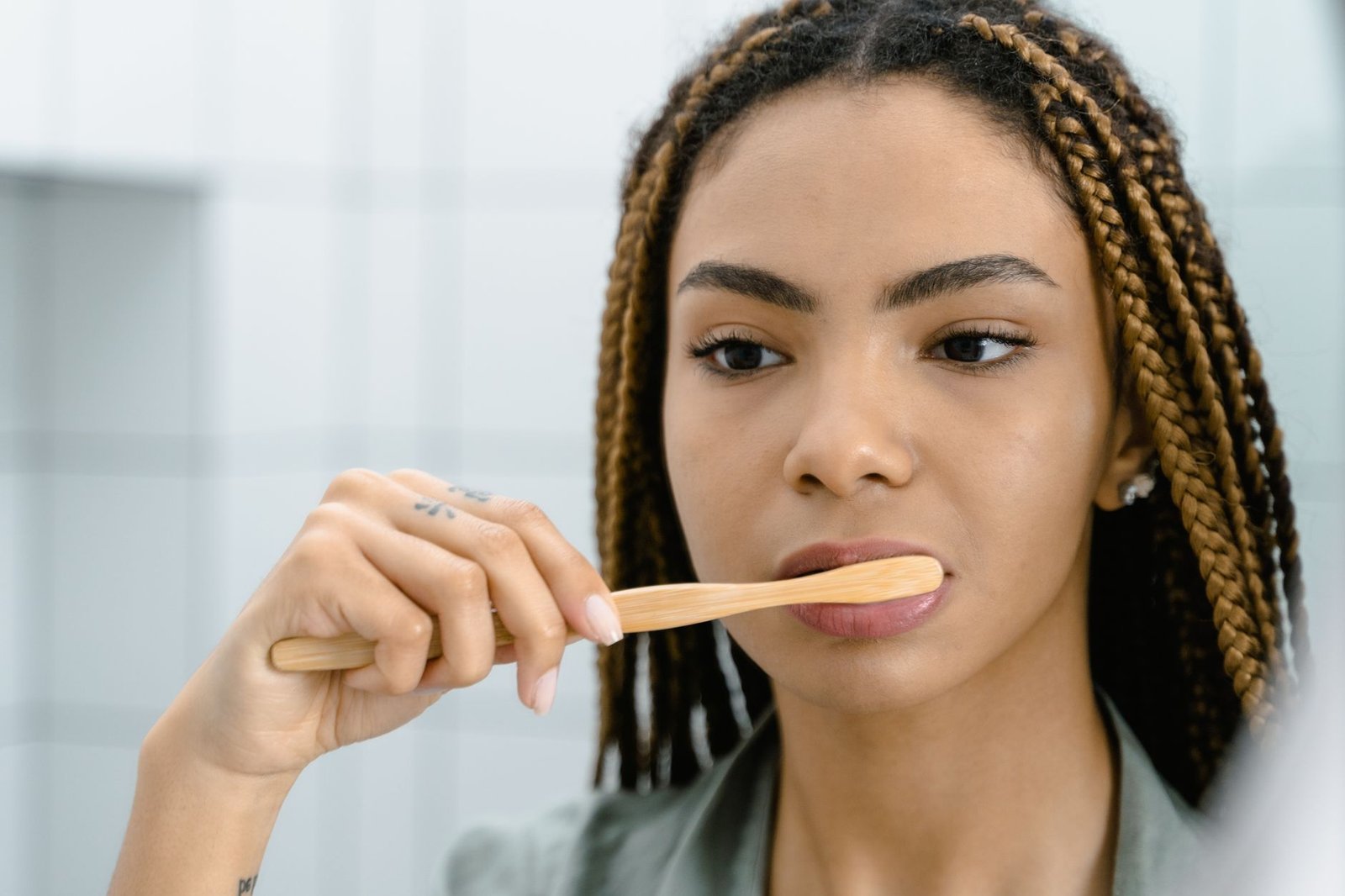
- Improve oral hygiene. Brush, floss, and clean the tongue itself with a scraper or toothbrush.
- Reduce the triggers. Cut back on coffee, tea, and alcohol, and quit tobacco if you use it.
- Review medicines with a provider. Only a prescriber should change a medicine.
- Get a prescription when needed. A provider may prescribe antibiotics, antifungals, or retinoids if overgrowth is present.
- Surgery is a rare last resort. Traditional or laser removal exists for stubborn cases.
The PubMed Central review agrees on the basics: remove offending agents, reassure the patient the condition is benign, and gently clear the surface with a soft toothbrush or tongue scraper. It also mentions drinking plenty of fluids and eating more raw fruits and vegetables, which add friction and cleaning action.
A simple daily tongue routine
- Start at the back and sweep forward. Reach as far back as is comfortable.
- Use light pressure. The goal is to lift the film, not to scrub the tongue raw. If it stings or bleeds, ease off.
- Rinse the brush or scraper after each pass. Otherwise you drag the same debris back across.
- Do it twice a day. Do it with your normal brushing so it becomes a habit.
- Drink water through the day. A moist tongue sheds more easily.
A Cochrane review that looked at tongue cleaning for bad breath found weak and unreliable evidence of a small difference in favor of scrapers over toothbrushes, based on only two small trials. So a scraper may do a slightly better job. A soft toothbrush is still a fine choice. Our guide to a white coating on the tongue covers the same cleaning method in more detail.
How fast to expect results
Cleveland Clinic says symptoms usually clear within about one to two weeks. The PubMed Central review describes resolution within days to a few weeks after debridement and removal of the trigger, with an excellent prognosis. If you have changed your habits and cleaned the tongue daily for several weeks with no change, book an appointment.
Where Oral Probiotics Fit, and Where They Do Not
People often ask whether a probiotic can fix black hairy tongue. The honest answer is no, not on its own. The PubMed Central review says only that yogurt and probiotics show variable success. There is no trial showing that an oral probiotic clears the condition, and it cannot replace cleaning, trigger removal, or a diagnosis.
The reasoning behind oral probiotics is about the balance of bacteria in the mouth. The idea is that helpful strains may crowd out odor-causing ones. That is a plausible mechanism, and it is not proven for this condition. Our ProDentim review is upfront about the limits of the evidence behind that product, and our ingredient breakdown shows what is in a formula like it. For a wider comparison, see the best probiotics for bad breath.
If you want to try one as an extra on top of the basics, that is your call. Check with a doctor first if you have a weakened immune system or take medicine that suppresses it, since that group is also the one most likely to have a serious cause behind a tongue change.
How to Keep It From Coming Back
Cleveland Clinic's prevention list is short and practical:
- Brush twice a day and floss daily.
- See a dentist for routine checkups and cleanings.
- Clean your tongue regularly.
- Limit coffee, tea, and alcohol.
- Quit tobacco.
- Avoid peroxide-containing mouthwashes.
- Talk to a provider about medication changes if a drug may be responsible.
If you recover from a soft-food phase, such as after dental work or illness, add some firm, fibrous foods back. The friction helps wear the papillae down.
When to See a Dentist or Doctor
Most cases clear with better hygiene. Book an appointment when any of these apply:
- It persists after you change your habits and clean your tongue. Cleveland Clinic gives this as the point to see a provider.
- The patch is white rather than black or brown. It may be hairy leukoplakia.
- You suspect a medicine is the cause. Ask the prescriber before stopping anything.
- A dark spot is isolated, new, or changing. It is not the diffuse furry pattern.
- You have a weakened immune system. Cancer treatment, HIV, or a transplant raises the stakes.
- It hurts, burns, or makes eating difficult.
- Taste changes or bad breath will not settle.
A dentist can usually diagnose it by looking. If the answer is a harmless coating, you have lost five minutes. If it is not, you have caught it early.
Frequently Asked Questions
Is black hairy tongue dangerous?
No. Cleveland Clinic calls black hairy tongue harmless, fairly common, and usually temporary. The color comes from debris and pigment caught on overgrown papillae. See a clinician if it does not improve after you clean your tongue and change your habits.
How long does black hairy tongue last?
Cleveland Clinic says it usually clears within about one to two weeks once you improve oral hygiene and remove triggers. A review in PubMed Central describes resolution within days to a few weeks. Persistent cases need a professional look.
Can Pepto-Bismol turn the tongue black?
Yes. Bismuth salicylate can stain the tongue dark without any papillae growth, which is called pseudo-black hairy tongue. The stain fades after you stop the product. Never stop a prescribed medicine without asking the prescriber.
Can I scrape or brush black hairy tongue away?
Gentle brushing or scraping is the main home treatment. Use light pressure from the back of the tongue forward. Hard scrubbing irritates the tissue and does not clear it faster.
Is a hairy tongue that looks white the same thing?
Not necessarily. Cleveland Clinic says a hairy white patch may be hairy leukoplakia, a different condition linked to a virus and to weakened immunity. A white hairy patch deserves a clinician's opinion.
Will a probiotic cure black hairy tongue?
No probiotic has been shown to cure it. A review in PubMed Central says yogurt and probiotics show variable success. Tongue cleaning and removing the trigger do the real work.